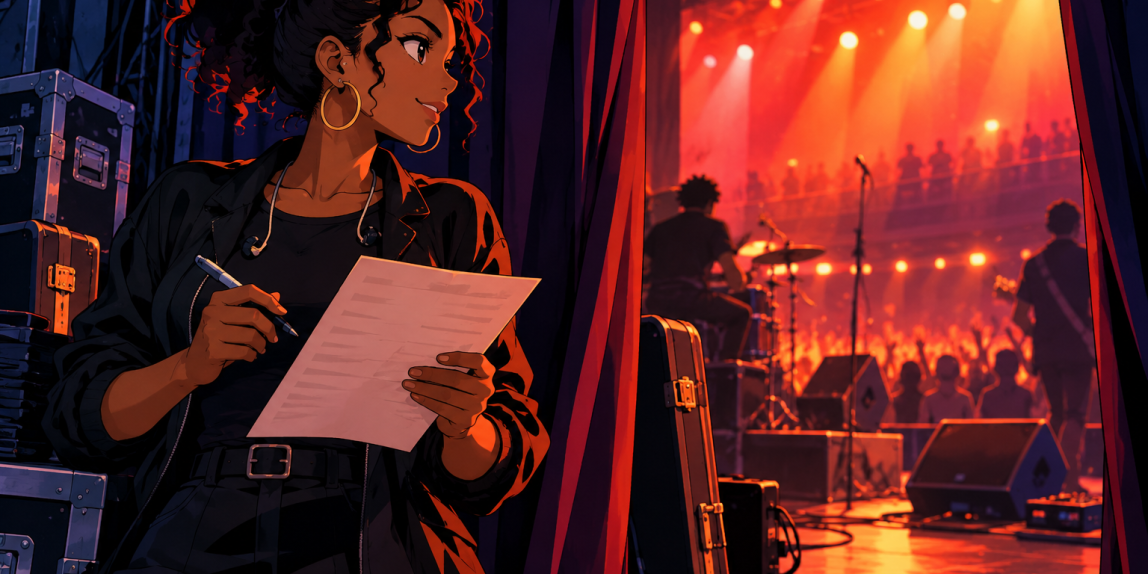
A set list is not a grocery list of songs you happen to know. It is the emotional traffic pattern of the whole show.
I have seen musicians treat the set like this: put the songs in an order, print the page, done.
Nope.
The order changes how the same songs feel. It changes whether the crowd trusts you early, whether the middle drags, whether a feature feels earned, whether the ballad lands, whether the closer actually feels like a closer, and whether the band spends the night slamming on the brakes between songs.
A strong set list does not just tell the band what comes next. It tells the show where to go.
Open with confidence, not explanation
The first song has a job: establish authority fast.
I usually want the opening to feel like we meant to walk on that stage. That does not always mean the loudest or fastest song. It means something the band can lock into immediately and something the audience can understand without a five-minute seminar.
The beginning of the show is a bad place for unnecessary fragility.
If the opener has a complicated intro that falls apart when the monitor mix is weird, a tempo nobody agrees on, three instrument changes and a prayer circle, maybe that is not your opener.
Get everybody in the room together first.
Earn the slower moments
A ballad can be one of the biggest moments in a show.
But if you put it in the wrong place, it can also feel like somebody unplugged the building.
Energy is relative. A quiet song feels powerful when the crowd has already been pulled in and is willing to lean toward you. If you ask them to lean in before you have earned their attention, sometimes they just lean toward the bar.
I like thinking in waves: build, release, build again.
Energy
Tempo, dynamics, groove, intensity, volume, and how physically active the stage feels.
Attention
How much listening the audience is willing to give you at that point in the show.
Contrast
What the next song changes: tempo, texture, key center, instrumentation, mood, or emotional weight.
Logistics
Instrument switches, tuning, talking, guest entrances, track cues, technical resets, and what the band physically needs to do.
Do not put five songs with the same emotional temperature together
Musicians know the songs are different because we know every chord voicing, arrangement and backstory.
The audience may just hear: medium tempo, medium tempo, medium tempo, medium tempo, medium tempo.
That is how a perfectly good catalog starts feeling like one very long song.
Change the temperature.
Maybe the groove changes. Maybe the instrumentation gets smaller. Maybe the next song begins with no drums. Maybe you talk. Maybe you move from something slick to something raw. Maybe the band hits them hard, then gets the hell out of the way.
Transitions are part of the show
Dead air has a sound.
You finish a strong song. The audience reacts. Then everybody onstage looks down, somebody turns a page, somebody else asks what key the next song is in, the drummer drinks water, and forty-five seconds later the next intro crawls into existence.
You just spent the applause.
Not every transition needs to be slick like television. I actually like human moments onstage. But the band should know the difference between an intentional breath and everybody wandering around looking confused.
Decide where you talk. Decide which songs connect. Decide where the musical director or drummer is cueing the next thing. Decide when the audience needs a second.
That is arranging the show.
Feature moments should feel like part of the story
If you have great musicians, let people hear them.
But a feature works better when it feels like the show opened a door for that person rather than somebody suddenly yelling, “Everybody solo!”
Give the moment a reason.
Maybe the arrangement thins out. Maybe a vamp opens. Maybe the featured player has already been introduced musically before you say their name. Maybe the whole set has been building toward that explosion.
A great solo in the wrong place can still mess with the pacing.
Put the song after the big song on purpose
People think a lot about the peak. I also think about what follows it.
If you just had a monster moment, do you want to top it immediately? Let the room breathe? Turn emotional? Talk to the crowd? Change instrumentation?
The song after the biggest reaction can determine whether the show keeps climbing or feels like it already ended twenty minutes early.
One test I like: look at the set list without thinking about individual songs. Mark the energy from 1 to 10 beside every title. If the numbers make no shape at all—or they sit at 7 for an hour—you probably have some arranging to do.
Build around what the band has to physically do
Here is where fantasy meets the stage.
You may love a certain sequence musically. Great. Now tell me when the keyboard player changes patches. Tell me when the guitarist changes instruments. Tell me when the horn player grabs the flute. Tell me when the guest walks on. Tell me when the tracks load. Tell me when somebody needs ninety seconds to fix something.
A set list that ignores those realities will force the show to solve them publicly.
I would rather hide the mechanics inside the pacing.
That is the same operating mindset behind preparing for a fly date: the audience should get the performance, not the logistical problem that happened five minutes before it.
Read the room—but do not become a hostage to it
You should absolutely feel the audience.
If they are with you, you can sometimes stay somewhere longer. If something is not connecting, you may need to move. If the room is talking loudly, the delicate thing you planned might need a different setup.
But “read the room” does not mean rebuild the entire show every night because one guy crossed his arms during song three.
Have a structure strong enough to trust and flexible enough to adjust.
Your closer should answer the question, “Why did I come see you?”
The last real song has to leave an identity behind.
That might mean joy. Fire. Emotion. Musicianship. A signature song. Something communal. Something the crowd can carry into the lobby.
I do not want to finish a show with a song that merely happens to be last.
I want the ending to feel inevitable after it happens.
And if you are building an owned audience from the room, the set itself can help that too. The right moment to mention a signup or direct connection is part of pacing, not just marketing. I break that down in how musicians turn live shows into an owned audience.
A set list should feel good before you even play it
Read it top to bottom.
Can you feel where the show gets bigger? Can you see the breath? Do the instrument changes make sense? Are you putting the best material where people are actually ready for it? Is there a dead patch you keep pretending is “vibe”?
Then rehearse the transitions, not only the songs.
A band can know every song perfectly and still play a clumsy show.
The songs are the material.
The set list is the architecture.
Build the damn room.
About Jackiem Joyner: Jackiem Joyner is a touring recording artist and bandleader who has spent years building shows around real stages, real musicians, real travel and real audiences.